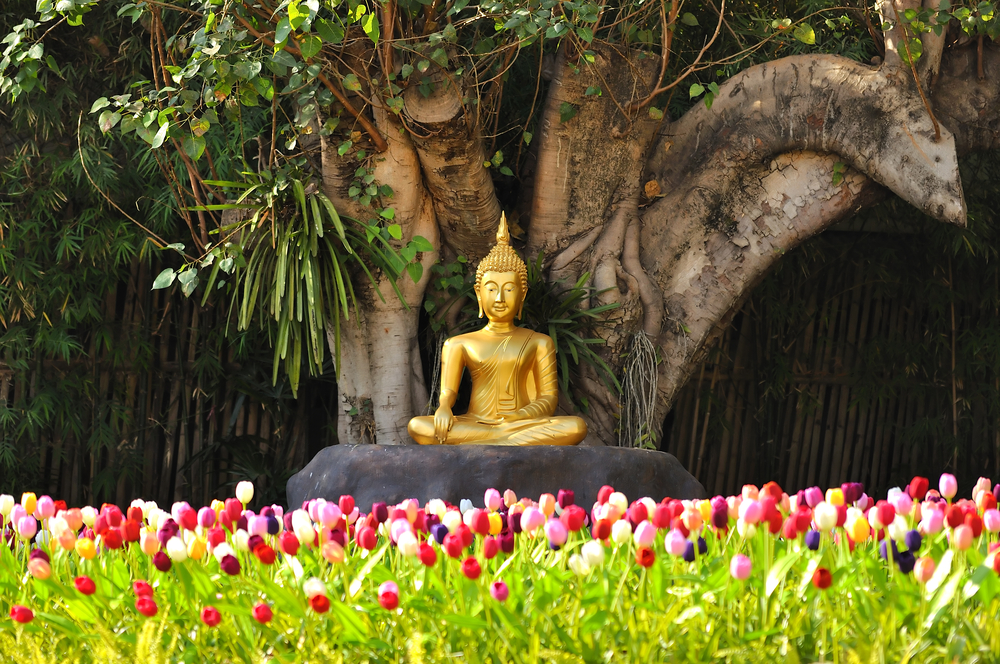

First select a suitable place for your regular meditation. Place a meditation cushion or chair there for your use, and add any books or images that help make it feel like a sacred and peaceful space.
Select a regular time for practice that suits your schedule and temperament. If you are a morning person, experiment with a sitting before breakfast. If evening fits your temperament or schedule better, try that first. Begin with sitting ten or twenty minutes at a time. Later you can sit longer or more frequently. Daily meditation can become like bathing or toothbrushing. It can bring a regular cleansing and calming to your heart and mind.
Whether you are on a chair or cushion, sit erect without being rigid. Let your body be firmly planted on the earth, your hands resting easily, your heart soft, your eyes closed gently. Sense your body and soften any obvious tension. Let go of any habitual thoughts or plans. Now, bring your attention to feel the sensations of your breathing. Take a few deep breaths to sense where you can feel the breath most easily, as coolness or tingling in the nostrils or throat, or as movement of the chest, or rise and fall of the belly. Now let your breath be natural. Feel the sensations of each breath very carefully, relaxing into each breath as you feel it, noticing how the soft sensations of breathing come and go without effort.
After a few breaths your mind will probably wander. No matter how long or short a time you have been away, gently come back to the next breath. Before you return, you can mindfully acknowledge where you have gone with a soft word in the back of your mind, such as “thinking,” “wandering,” “hearing,” “itching.” After silently naming where your attention has been, relax and gently return to feel the next breath. As your meditation develops, you can become more fully mindful of the places where your mind wanders. When strong feelings, emotions, sensations or thoughts carry you from the breath, receive them with the same mindful noticing you give to the breath. Acknowledge them and name them gently. When they pass, return to the breath. Or if you are just beginning or want to become steadier, one word of acknowledgement and a return to breath is fine. As you sit with the breath, let the rhythms change naturally, allowing it to be short, long, fast, slow, rough or easy. Steady yourself by relaxing into the breath. When your breath becomes soft, let your attention become gentle and careful, as soft as the breath itself.
Like training a puppy, you will gently bring yourself back a thousand times. Over weeks and months of this practice you will gradually calm and focus yourself using the breath. There will be many cycles in this process, stormy days alternating with clear days. Just stay with it. As you do, you will find awareness of the breath helping to steady and quiet your whole body and mind. From this your mindfulness of all other experiences will balance and center you amidst your ever changing life.
This excerpt is taken from the book, “The Wise Heart”