
“The lion’s roar in our own spiritual life arises when we rest in the truth of who we are — no longer bound by fear or pretense, but speaking and living from the center.” – Jack Kornfield
In the journey of awakening, there comes a time when practice moves beyond quiet perseverance and enters a realm of bravery and dignity. Rumi spoke of three stages of the spiritual path — the camel, the lion, and the freshness of the child. The camel teaches us devotion, the willingness to bear what is difficult. But then comes the lion — a presence of truth and fearlessness, what the Buddha himself called the lion’s roar.
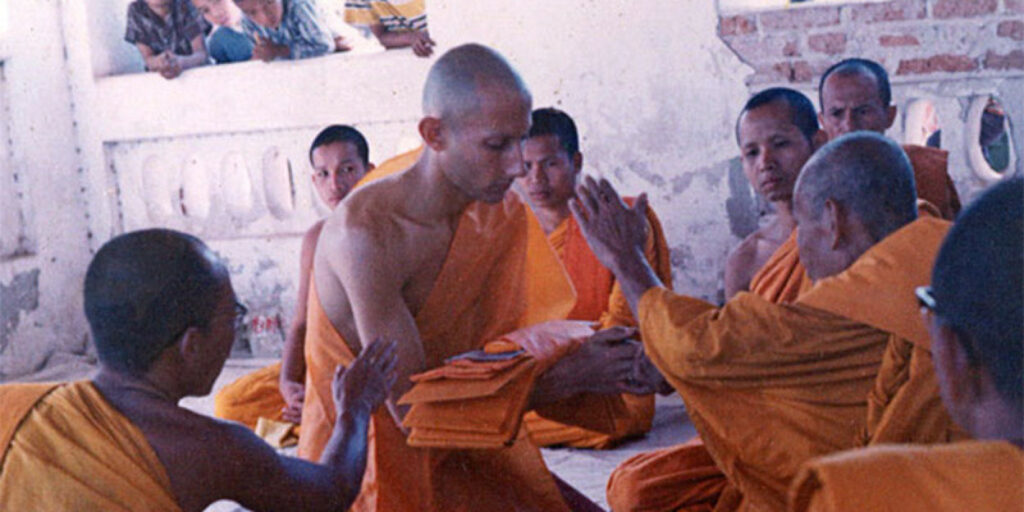
When challenged by skeptics, the Buddha would stand in the center of his being and declare: “I have mastered all the great ascetic practices, and beyond them I have found the way to freedom. You too can be free. Sit, face yourself with mindful awareness, and you will awaken.” His voice sounded the full authority of someone who had met life directly and discovered the unshakable ground of the heart.
A lion’s roar is not an ordinary sound. If you’ve ever heard one, even in a zoo, you know it reverberates through the whole body. The lion opens wide, roars from its core, and the whole place falls silent. Birds stop calling. Monkeys grow still. It is a sound that commands attention. In the same way, the lion’s roar in our own spiritual life arises when we rest in the truth of who we are — no longer bound by fear or pretense, but speaking and living from the center.
“To live with the lion’s roar is to stand in your full dignity, to honor the beauty in yourself and others, and to meet the world’s joys and sorrows with courage.” – Jack Kornfield
The Buddha described this dignity beautifully: “I consider the positions of kings and rulers as dust motes in a sunbeam. I see treasures of gold as broken tiles. I look upon the myriad worlds as small seeds, the rise and fall of beliefs as traces left by the seasons.” This is the perspective that comes when we see from our timeless Buddha nature — the inner royalty that is our birthright.
Poet William Stafford once wrote of a wanderer who, no matter how dark or cold the world becomes, can still answer the question Who are you? with “Maybe I’m a king. Maybe I’m a queen.” We all carry this possibility. Children understand it intuitively — that secret hope that one day a knock will come at the door, and we will be called back to our palace and our true inheritance.
To live with the lion’s roar is to live with full wisdom now — to stand in your innate dignity, to honor the beauty in yourself and others, and to meet the world’s joys and sorrows with courage. This is not arrogance, but a profound remembering: that beneath the stories and struggles, there is an unshakable nobility of heart.
Metta,
Jack